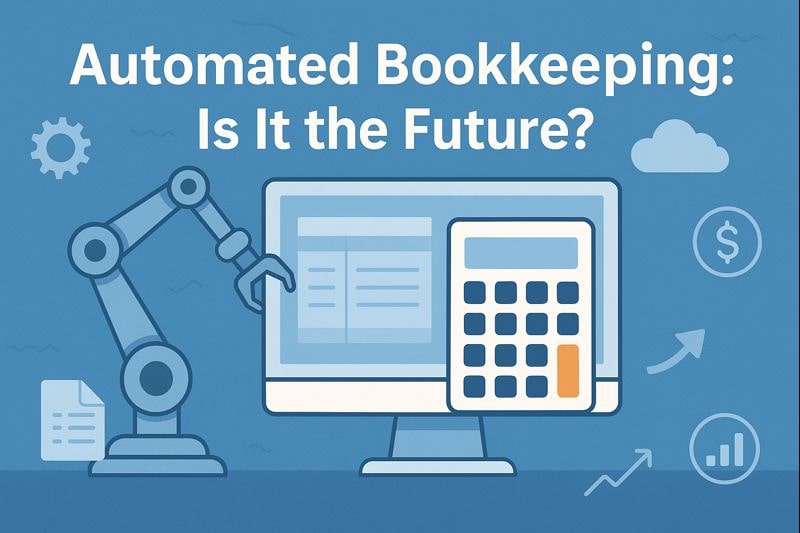
Automated Bookkeeping has moved from buzzword to business essential in only a few years. What used to mean “basic rules in accounting software” now includes AI agents, machine learning–driven categorization, real-time reconciliation, and proactive insights that can rival a full back-office team.
For owners, finance leaders, and accountants, the big question is no longer if automation is coming, but how far it will go and what role humans will play in this new landscape.
At its core, Automated Bookkeeping is about handing repetitive, rules-based, and data-heavy bookkeeping tasks to software.
Instead of manually entering invoices, downloading bank statements, or sorting hundreds of expenses, businesses connect their payment processors, bank accounts, e-commerce platforms, and payroll tools to smart systems that keep the books updated automatically.
Modern Automated Bookkeeping doesn’t just record data; it flags anomalies, suggests categorizations, and produces real-time dashboards for decision making.
Recent advances in AI have pushed Automated Bookkeeping into a new phase. The market for AI in accounting alone is forecast to grow at a very high double-digit rate through the end of this decade, driven by demand for automation, analytics, and compliance tools.
Leading platforms now include AI-powered “bookkeeping copilots” that reconcile transactions, predict cash flow, and even draft narratives for management reports. Automated Bookkeeping is becoming part of a broader “autonomous finance” trend, where systems act like a virtual finance team working alongside humans.
So is Automated Bookkeeping really the future, or just another temporary trend? In this in-depth guide, we’ll break down how Automated Bookkeeping works today, what benefits and risks it brings, how to choose the right solution, and what the next 5–10 years are likely to look like if you lean into automation now.
What Is Automated Bookkeeping?

Automated Bookkeeping is the use of software, AI, and connected data sources to manage day-to-day bookkeeping tasks with minimal manual input.
Instead of keying data line by line into a general ledger, Automated Bookkeeping systems ingest transactions directly from banks, payment gateways, point-of-sale systems, payroll providers, and invoicing tools. They then classify, reconcile, and post those entries to the proper accounts using rules and machine learning models.
Traditional bookkeeping relies heavily on human effort: downloading bank files, typing in invoices, matching payments to customers, and checking everything against statements at month-end. Automated Bookkeeping flips that model.
The system becomes the default “doer,” and humans become reviewers, exception handlers, and strategic decision-makers. This shift dramatically changes how time is spent inside a finance function. Instead of spending the week closing the books, teams can review automated work, investigate exceptions, and analyze trends.
Modern Automated Bookkeeping includes several layers. At the base, you still have double-entry accounting, journal entries, and ledgers. On top of that, automation handles data capture (through bank feeds, APIs, and OCR), categorization (using AI and rules), and reconciliation (matching transactions across systems).
At the highest level, Automated Bookkeeping solutions surface insights: performance dashboards, cash-flow projections, and anomaly alerts. The more data they process, the smarter and more accurate they become over time.
Importantly, Automated Bookkeeping is not “set it and forget it.” It still requires thoughtful configuration, ongoing oversight, and collaboration with accountants or controllers to ensure that tax rules, revenue recognition policies, and reporting structures reflect reality.
When implemented properly, however, Automated Bookkeeping can turn bookkeeping from a painful chore into a largely self-maintaining, always-on financial engine.
Key Technologies Powering Automated Bookkeeping
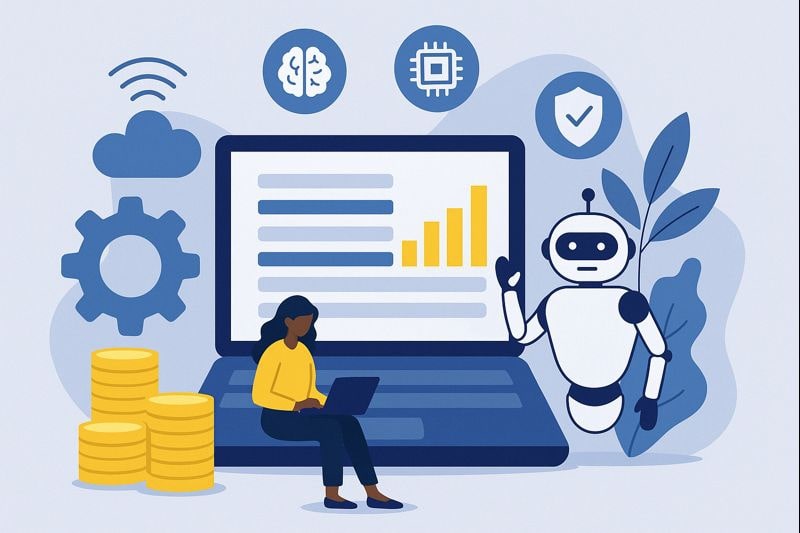
Several technologies converge to make Automated Bookkeeping possible. Understanding them helps you evaluate vendors and separate marketing hype from genuine innovation. At the foundation are bank and payment feeds connected through secure APIs.
These feeds deliver transaction data into your accounting or Automated Bookkeeping platform in near real time, replacing manual downloads and CSV uploads.
Optical Character Recognition (OCR) and Intelligent Document Processing (IDP) are another core piece of Automated Bookkeeping. They read invoices, receipts, bills, and statements, extracting key fields such as vendor, date, amount, taxes, and line items.
Modern systems combine OCR with machine learning to improve accuracy each time they see a similar document, making Automated Bookkeeping faster and more reliable as your transaction history grows.
Artificial intelligence and machine learning sit at the heart of today’s Automated Bookkeeping solutions. Models trained on millions of transactions can suggest chart-of-accounts codes, match payments to open invoices, and detect anomalies that merit human review.
Leading accounting tools now use AI for tasks like automated expense categorization, bank reconciliation predictions, and cash-flow forecasting, often branded as “smart” or “AI-powered” features.
Robotic Process Automation (RPA) may also play a role in Automated Bookkeeping. RPA bots can log into legacy systems, extract data, and perform repetitive steps that don’t yet have API access.
Combined with workflow engines and rule-based logic, these technologies allow Automated Bookkeeping systems to route tasks for approval, apply complex policies, and maintain audit trails. Together, APIs, OCR, AI, and RPA create an Automated Bookkeeping environment where most routine data work is handled by software, not people.
How Automated Bookkeeping Fits into the Accounting Lifecycle
Automated Bookkeeping doesn’t exist in isolation; it sits within a full accounting and finance lifecycle. This lifecycle starts with transaction capture, moves through classification and reconciliation, and ends with reporting, tax preparation, and strategic planning.
Automated Bookkeeping tools seek to streamline each of these stages so that data flows smoothly and reliably from first touch to final report.
At the transaction capture stage, Automated Bookkeeping pulls in data from bank feeds, card processors, payment gateways, point-of-sale systems, e-commerce platforms, payroll providers, and AR/AP tools.
Every sale, refund, bill, expense, and payroll run becomes a data point entering the Automated Bookkeeping pipeline. Instead of waiting for the month-end, this capture happens continuously, turning your books into a near real-time reflection of business activity.
Next comes classification and reconciliation. Automated Bookkeeping systems apply rules and AI models to categorize each transaction, assign it to the correct account, link it to a vendor or customer, and match it to related entries like invoices or bills.
When something doesn’t fit the pattern, Automated Bookkeeping flags it as an exception, asking a human to confirm or correct. Over time, the system learns from these decisions, reducing the number of exceptions.
Finally, Automated Bookkeeping outputs updated ledgers, trial balances, financial statements, and dashboards. Because the books are continuously updated, period-end closes can be faster and more predictable.
Automated Bookkeeping can also feed other finance processes: budgeting, forecasting, cash-flow management, and even scenario planning. Instead of scrambling to assemble data, finance teams can trust that Automated Bookkeeping is keeping numbers current and consistent across the accounting lifecycle.
Why Automated Bookkeeping Is Growing So Fast

Automated Bookkeeping is growing quickly because businesses are under pressure to do more with less, move faster, and maintain spotless compliance. The combination of higher labor costs, complex digital revenue streams, and increasingly strict regulations makes manual bookkeeping harder to sustain.
Automated Bookkeeping directly addresses this by reducing repetitive work, lowering error rates, and giving real-time visibility into financial performance.
AI and automation have also become more accessible. Cloud accounting platforms and specialized Automated Bookkeeping tools now offer AI features that were once only available to large enterprises with in-house development teams.
Many of these capabilities are built directly into popular accounting software, so businesses can access Automated Bookkeeping with a subscription instead of large upfront investments. Industry analyses show AI and automation as the dominant trend shaping accounting and bookkeeping software through 2024 and beyond.
Another driver of Automated Bookkeeping is the shift to digital and remote work. Businesses rely on online sales, subscription billing, distributed teams, and multiple payment providers. This creates fragmented data.
Automated Bookkeeping helps reconnect that data through integrations and APIs, providing a single source of truth for the books. With Automated Bookkeeping, leaders can make decisions based on up-to-date numbers rather than outdated spreadsheets or gut feel.
Investor interest is accelerating innovation as well. AI-driven accounting and Automated Bookkeeping startups have raised substantial funding in the last couple of years, building platforms that automate complex reconciliation and close processes once reserved for enterprise software.
This level of investment signals a broad belief that Automated Bookkeeping is not just a niche feature, but a foundational technology that will reshape how finance functions operate.
AI and Machine Learning as the New Bookkeeping Engine
In modern Automated Bookkeeping systems, AI and machine learning function as the decision-making engine. Instead of a human deciding which account each transaction belongs in, AI models analyze historical data, vendor patterns, transaction descriptions, and even user behavior to make accurate categorization suggestions.
Over time, AI-driven Automated Bookkeeping becomes more tailored to the specific business, learning unique vendors, revenue streams, and coding rules.
Beyond categorization, AI enables Automated Bookkeeping to improve reconciliation. Machine learning models can match bank transactions to invoices, customer payments, and platform payouts even when descriptions don’t line up perfectly.
They can spot duplicate entries, identify gaps, and propose adjustments, dramatically speeding up the close process. Some Automated Bookkeeping tools now claim to process millions of transactions with very low error rates, demonstrating that AI can handle both volume and complexity when properly implemented.
AI also powers predictive features within Automated Bookkeeping. By analyzing historical revenue, expenses, and seasonal trends, systems can forecast cash flow, highlight upcoming cash crunches, and suggest actions like chasing overdue invoices or renegotiating terms.
Anomaly detection models flag unusual patterns that could indicate fraud, data errors, or operational changes that need attention. Automated Bookkeeping therefore becomes not only a record-keeper, but an early warning system and strategic assistant.
As AI models improve, we can expect Automated Bookkeeping to move further into areas like revenue recognition, tax optimization suggestions, and scenario analysis. The key trend is clear: Automated Bookkeeping is shifting from “automated data entry” to a continuously learning engine that supports higher-level financial decisions.
Cloud Accounting, APIs, and Open Finance
Cloud accounting has been a crucial enabler of Automated Bookkeeping. Instead of installing software on a single computer, businesses now run their accounting in the browser, connecting dozens of apps and data sources.
Automated Bookkeeping thrives in this environment because it can pull data from everywhere and push results back into the general ledger automatically. Cloud platforms often provide app marketplaces where Automated Bookkeeping tools plug directly into accounting data.
APIs (application programming interfaces) are the plumbing of Automated Bookkeeping. Banks, payment processors, payroll providers, e-commerce platforms, and invoicing tools expose APIs to share transaction data securely.
Automated Bookkeeping platforms use those APIs to sync data continuously, eliminating manual imports and exports. When combined with webhooks and event-driven architecture, Automated Bookkeeping can react to new transactions in near real time, keeping your books fresh rather than stale.
The broader “open finance” movement will likely deepen these connections. As financial institutions standardize data formats and improve API access, Automated Bookkeeping will gain richer, more reliable data to work with.
This will allow Automated Bookkeeping systems to drill deeper into transaction context, fees, tax, and counterparties, improving categorization and analytics. Over time, Automated Bookkeeping could act as the central hub for all financial systems, orchestrating data flows across banking, payments, payroll, and analytics tools.
Benefits of Automated Bookkeeping for Modern Businesses
The business case for Automated Bookkeeping rests on a few key benefits: time savings, cost efficiency, better accuracy, real-time visibility, and improved compliance. For many organizations, bookkeeping is an unavoidable cost of doing business.
Automated Bookkeeping turns that cost center into a value-generating function that supports faster decisions and stronger financial health.
First, Automated Bookkeeping saves time. Tasks that used to take hours—like categorizing monthly expenses or reconciling multiple accounts—can now run in the background. For owners, this means fewer late nights spent catching up on books.
For finance teams, Automated Bookkeeping means fewer manual spreadsheets and more time analyzing numbers. When a system updates the books automatically every day, period-end closes are shorter and more predictable.
Second, Automated Bookkeeping improves accuracy. Manual data entry is error-prone, especially when multiple people are keying in information from different sources. Automated Bookkeeping reduces this risk by ingesting data directly from systems of record, then applying consistent rules and quality checks.
AI and rule engines can flag transactions that don’t fit patterns, prompting human review where it matters most. The result is cleaner ledgers, fewer surprises, and more confidence in reports.
Finally, Automated Bookkeeping delivers real-time financial insight. Instead of waiting weeks for a bookkeeper to close the month, leaders can log into dashboards and see current revenue, expenses, margins, and cash position.
Automated Bookkeeping tools often include visualizations and key performance indicators that make complex data easier to understand. This real-time view supports better decisions about hiring, marketing spend, inventory purchases, and financing. Automated Bookkeeping turns accounting from a backward-looking chore into a forward-looking tool.
Time, Cost, and Productivity Gains
Time and cost savings are usually the first benefits people associate with Automated Bookkeeping. When software handles repetitive entry, classification, and reconciliation, fewer human hours are required to keep the books current.
For small teams, Automated Bookkeeping can replace several hours per week of manual work. For larger finance departments, it can streamline the workload of multiple full-time employees, allowing them to focus on higher-value tasks.
These savings translate directly into reduced labor costs or the ability to redeploy staff toward strategic projects: building dashboards, improving forecasts, refining pricing, or supporting fundraising. Instead of paying for low-value data entry, companies can use the same budget to support analysis and planning.
Automated Bookkeeping also minimizes overtime during busy seasons, such as year-end close or tax filing periods, reducing burnout and turnover.
Productivity gains from Automated Bookkeeping go beyond the finance team. When expense reimbursements, vendor bills, and customer invoices flow through automated workflows, employees spend less time chasing approvals or answering “what is this charge?” questions.
Executives get faster access to financials, so decisions don’t stall while waiting for reports. Automated Bookkeeping also reduces the “hidden tax” of context switching—jumping between systems and spreadsheets—by centralizing financial data in one place.
Over time, the compounding effect of these productivity gains is significant. Automated Bookkeeping doesn’t just shave a few minutes off tasks; it changes how work is structured.
Once routine tasks are automated, teams can redesign processes to be leaner and more digital from end to end. That makes the organization more agile and better equipped to respond to new opportunities and risks.
Accuracy, Visibility, and Real-Time Decision Making
Automated Bookkeeping improves accuracy by cutting manual data entry out of the process. Whenever humans type numbers from receipts or statements into a system, mistakes happen—digits get transposed, amounts are misread, or entries are posted to the wrong accounts.
Automated Bookkeeping reduces these risks by using direct data connections and machine learning to correctly interpret and categorize transactions.
OCR and AI-based document processing lower the chance of reading errors, while rules and historical patterns help Automated Bookkeeping catch outliers. When a vendor suddenly appears in an unusual category or a large transaction deviates from normal patterns, the system can flag it for review rather than silently misclassifying it. Automated Bookkeeping therefore becomes a quality control layer on top of the raw data, actively hunting for issues rather than waiting for an auditor to find them.
Real-time visibility is another major advantage of Automated Bookkeeping. With continuous syncing and processing, financial data is no longer locked in monthly cycles.
Automated Bookkeeping tools keep ledgers up to date as transactions occur, enabling rolling views of revenue, expenses, and cash flow. Dashboards built on Automated Bookkeeping data can show up-to-the-minute key metrics such as burn rate, runway, gross margin, or accounts receivable aging.
This level of visibility supports better decision making at every level. Owners can see whether they can afford a new hire. Sales leaders can understand the financial impact of discounts. Operations teams can monitor cost trends and react quickly to overspending.
Automated Bookkeeping doesn’t just keep a historical record; it powers a living, breathing picture of the business’s financial health that updates daily.
Compliance, Taxes, and Audit Readiness
Automated Bookkeeping has a major role to play in compliance, taxes, and audit readiness. Many compliance issues stem from missing documentation, inconsistent categorization, or delayed reconciliations.
Automated Bookkeeping addresses these weaknesses by enforcing consistent processes and maintaining a complete digital audit trail of financial activity. Every transaction, approval, and adjustment is timestamped and traceable.
For tax purposes, Automated Bookkeeping makes it easier to track deductible expenses, separate personal and business transactions, and maintain proper records for income, payroll, and sales tax.
When Automated Bookkeeping systems classify transactions consistently and attach supporting documents, preparing returns becomes much simpler. Tax professionals can focus on applying rules and credits, instead of spending hours cleaning up the books.
From an audit perspective, Automated Bookkeeping helps by improving data integrity and providing transparency. Automated reconciliations and anomaly detection reduce the risk of material misstatements going unnoticed.
If an audit does occur, the combination of organized documentation, clear workflows, and detailed system logs simplifies the process. Automated Bookkeeping can generate reports on how data flowed through the system, what rules were applied, and who approved changes.
This transparency strengthens internal controls and gives stakeholders more confidence in the reported numbers.
Risks, Limitations, and Challenges of Automated Bookkeeping
Despite its benefits, Automated Bookkeeping is not risk-free. Over-reliance on automation, weak vendor controls, and poor configuration can create blind spots that lead to errors, compliance issues, or even fraud. Understanding these risks helps you implement Automated Bookkeeping in a way that enhances control instead of undermining it.
One major challenge is the “black box” nature of some AI-driven Automated Bookkeeping tools. If the system doesn’t clearly explain why it categorized a transaction a certain way, users may struggle to catch subtle errors or biases.
Automated Bookkeeping must be transparent enough for accountants and auditors to trust and validate its outputs. Otherwise, you risk replacing manual spreadsheets with automated confusion.
Another limitation of Automated Bookkeeping is that it still depends on good underlying data. If bank feeds break, platforms go offline, or integrations are misconfigured, transactions may be missing or duplicated.
Automated Bookkeeping can only be as accurate as the data it receives, so monitoring and maintaining integrations is critical. Poor implementation can turn Automated Bookkeeping into an automated way of propagating mistakes across systems.
Change management is another challenge. Introducing Automated Bookkeeping requires rethinking roles and processes. Staff who previously did data entry may feel threatened or unsure about their new responsibilities.
Without training and communication, they may resist using Automated Bookkeeping features or bypass them with manual workarounds. Automation that isn’t fully adopted cannot deliver its promised value.
Data Security, Privacy, and Vendor Risk
Data security and privacy sit at the top of most concerns around Automated Bookkeeping. Financial data is highly sensitive, including bank account details, payroll information, and customer records.
Automated Bookkeeping tools that connect to multiple systems create attractive targets for attackers. Businesses must carefully evaluate how each Automated Bookkeeping vendor handles encryption, access controls, and incident response.
When you adopt Automated Bookkeeping, you are also taking on vendor risk. If a provider suffers a breach, experiences downtime, or changes its pricing model, your bookkeeping operations could be affected.
Due diligence is therefore essential. Look for Automated Bookkeeping vendors that undergo independent security audits, offer strong access controls (like SSO and granular permissions), and provide transparency about data locations and subcontractors.
Privacy regulations add another layer of complexity. Depending on where you operate and which customers you serve, Automated Bookkeeping must respect various data protection requirements.
That means having clear data processing agreements with vendors, understanding how long data is stored, and ensuring that Automated Bookkeeping tools allow you to delete or export information as needed.
Treat Automated Bookkeeping vendors as extensions of your finance team—hold them to the same standards you’d expect internally.
Human Oversight, Errors, and Over-Reliance on Automation
Automated Bookkeeping can create a false sense of security. When the system runs smoothly, it’s tempting to assume everything is correct and stop looking closely at the details. But automation mistakes can be subtle and compound over time.
If a rule is misconfigured or an AI model learns the wrong behavior, Automated Bookkeeping may consistently misclassify certain transactions or accounts until someone notices.
Human oversight is therefore a non-negotiable part of Automated Bookkeeping. Accountants and finance leaders should regularly review exception reports, spot-check categories, and reconcile critical accounts.
Automated Bookkeeping should provide transparency, allowing users to see why decisions were made and adjust rules when necessary. A healthy relationship with Automated Bookkeeping is collaborative: software handles the volume while humans apply judgment.
Over-reliance on automation can also erode skills. If staff stop practicing manual reconciliations or understanding underlying accounting principles, they may struggle to catch issues or step in when systems fail.
To avoid this, training should focus on both how to use Automated Bookkeeping tools and how to think like an accountant. The goal is not to turn everyone into a data entry clerk again, but to ensure that Automated Bookkeeping augments human judgment rather than replacing it.
Skills, Change Management, and Ethical Concerns
Successfully adopting Automated Bookkeeping requires new skills and a structured change-management process. Team members must learn to design rules, interpret dashboards, manage integrations, and evaluate AI suggestions.
They also need to understand where Automated Bookkeeping is strong and where human judgment should dominate. Investing in upskilling and continuous learning is crucial as tools evolve rapidly.
Ethical concerns also arise with Automated Bookkeeping. Algorithmic bias can affect how transactions are flagged for review, how risk scores are assigned, or how decisions are made in areas like credit and fraud.
While Automated Bookkeeping is focused on bookkeeping tasks, its outputs can influence broader financial decisions. Ensuring fairness and transparency in Automated Bookkeeping models is therefore important for both compliance and trust.
Change management must address fears about job loss as Automated Bookkeeping takes over repetitive tasks. The reality is that roles will shift rather than disappear. Bookkeepers may spend less time typing and more time analyzing, communicating with clients, or managing systems.
Leaders should communicate this vision clearly, emphasizing that Automated Bookkeeping aims to elevate the finance function and open more strategic opportunities instead of simply cutting headcount.
Real-World Use Cases of Automated Bookkeeping
Automated Bookkeeping is not theoretical; it’s already being used across industries and business sizes. From solo founders to high-growth tech companies and established firms, Automated Bookkeeping is reshaping how financial operations run day to day. Understanding these use cases can help you see where Automated Bookkeeping fits into your own context.
One common use case is simple transaction categorization and reconciliation. Here, Automated Bookkeeping connects to bank feeds and card processors, automatically tagging expenses and matching them to invoices.
Another use case is revenue recognition and payout reconciliation for online businesses that sell through multiple channels. Automated Bookkeeping pulls in platform reports, payment processor data, and bank deposits to reconcile everything back to the general ledger.
More advanced use cases of Automated Bookkeeping include AI-driven close management for high-volume businesses. Startups and platforms that process millions of transactions use Automated Bookkeeping tools to handle transaction matching, flux analysis, and journal entry creation at scale.
In each case, the goal of Automated Bookkeeping is the same: reduce manual work, improve consistency, and give decision-makers faster access to accurate financial data.
Automated Bookkeeping for Small Businesses and Startups
For small businesses and startups, Automated Bookkeeping can be transformative. Owners often juggle sales, operations, and finance, leaving bookkeeping as a weekend or late-night task.
Automated Bookkeeping reduces that burden by syncing transactions automatically and keeping the books in order without constant attention. Bank feeds, invoicing tools, and expense apps connect directly to the accounting system, where Automated Bookkeeping rules do most of the sorting.
Startups benefit from Automated Bookkeeping because they need investor-grade financials early in their journey. Clear, up-to-date financial reports are essential for fundraising, budgeting, and runway planning.
Automated Bookkeeping supports this by making monthly closes faster and more consistent, even when transaction volumes spike. Founders can review dashboards showing burn rate, runway, and growth metrics without waiting weeks for manual updates.
Automated Bookkeeping also helps small businesses and startups manage compliance as they grow. Sales tax, payroll obligations, contractor payments, and revenue recognition rules become more complex over time.
While Automated Bookkeeping isn’t a substitute for an experienced CPA or controller, it dramatically improves the underlying data quality those professionals rely on.
When the books are always current, advisors can focus on strategy instead of basic cleanup, giving small businesses and startups a higher level of financial insight earlier in their life cycle.
Automated Bookkeeping for E-commerce, SaaS, and Digital-First Brands
E-commerce, SaaS, and other digital-first businesses are prime candidates for Automated Bookkeeping because they often deal with high transaction volume, multiple platforms, and complex payout structures.
Sales might come from online marketplaces, direct storefronts, subscription billing systems, and in-app purchases, each with different fees, tax rules, and timing. Automated Bookkeeping connects these data sources and reconciles them into a single, coherent view.
For example, an e-commerce company may use Automated Bookkeeping to ingest order data, shipping costs, payment processor fees, and returns information.
The Automated Bookkeeping system then maps these flows to revenue, cost of goods sold, and operating expenses. Similarly, a SaaS business might rely on Automated Bookkeeping to handle recurring invoices, failed payments, proration, discounts, and deferred revenue recognition within the general ledger.
Digital-first brands often operate across currencies and regions, adding another layer of complexity. Automated Bookkeeping can help standardize currency conversions, apply consistent tax treatments, and provide consolidated reporting.
Dashboards powered by Automated Bookkeeping show metrics such as Monthly Recurring Revenue (MRR), churn, Lifetime Value (LTV), and acquisition cost, all tied back to accurate accounting data. Automated Bookkeeping thus becomes the backbone of financial reporting for these data-rich, fast-moving companies.
Automated Bookkeeping for Accounting and Bookkeeping Firms
Accounting and bookkeeping firms themselves are embracing Automated Bookkeeping to serve more clients with higher quality. Instead of manually reconciling accounts for dozens or hundreds of clients, firms use Automated Bookkeeping to handle routine work, allowing staff to focus on advisory services.
This shift aligns with broader industry trends toward virtual CFO offerings, strategic tax planning, and financial coaching.
By adopting Automated Bookkeeping, firms can standardize workflows across clients. Bank feeds, receipt capture, and rules can be configured once and reused across similar industries.
Automated Bookkeeping tools also make it easier to monitor client books for anomalies, missing transactions, or overdue reconciliations, using alerts and dashboards to prioritize work. This proactive approach improves client satisfaction and reduces surprise issues at year-end.
Automated Bookkeeping also supports new business models for firms. With automation handling volume, firms can move away from hourly billing for data entry and toward fixed-fee packages that emphasize outcomes: timely financials, insights, and strategic support.
Automated Bookkeeping becomes a key differentiator, allowing forward-thinking firms to grow profitably while maintaining quality.
How to Choose and Implement an Automated Bookkeeping System
Choosing the right Automated Bookkeeping system requires more than picking the tool with the flashiest AI claims. You need to consider your existing tech stack, volume, complexity, team skills, and long-term strategy.
Automated Bookkeeping should fit seamlessly into your workflows, support growth, and offer enough flexibility to adapt as your business evolves.
Start by mapping your current bookkeeping process. List every system that generates financial data: bank accounts, credit cards, payment gateways, invoicing tools, payroll, POS, e-commerce platforms, subscription billing, and expense management apps.
Then ask how Automated Bookkeeping will connect to each source and where your “source of truth” general ledger will live. Your goal is an Automated Bookkeeping setup where all roads lead into a central, well-structured accounting system.
Next, define your must-have and nice-to-have features. Some organizations prioritize real-time dashboards and cash-flow forecasting. Others care more about multi-entity consolidation, complex revenue recognition, or robust approval workflows.
Keep your industry requirements in mind, especially if you deal with inventory, project accounting, or regulated financial services. Automated Bookkeeping should support your core realities, not force you into workarounds.
Finally, evaluate vendors carefully. Look beyond marketing language and ask detailed questions about integrations, security, support, and product roadmap. Ask for demos that reflect your actual workflows and test how Automated Bookkeeping handles edge cases.
Talk to references in similar industries or stages. A good Automated Bookkeeping partner will be transparent, responsive, and committed to helping you succeed over the long term.
Features and Capabilities to Look For
When evaluating Automated Bookkeeping solutions, focus on capabilities that map directly to your needs. Start with data ingestion: can the system connect to all your banks, cards, payment processors, payroll providers, and sales channels? Are those connections native or reliant on third-party syncing tools? Strong, stable integrations are essential for Automated Bookkeeping, because everything else depends on reliable data.
Next, examine how Automated Bookkeeping handles classification and rules. Look for flexible rule engines that allow you to define logic based on vendor names, transaction descriptions, amounts, tags, and more.
AI-assisted suggestions can accelerate rule creation, but you should retain control. Automated Bookkeeping should also support bulk editing and learning from corrections so that the system improves over time instead of repeating the same mistakes.
Reconciliation features are another key differentiator. Robust Automated Bookkeeping tools will match transactions across bank feeds, invoices, bills, and platform reports, highlighting discrepancies and suggesting fixes.
They should support partial payments, split transactions, and multi-currency scenarios. Reporting and analytics built on top of Automated Bookkeeping are equally important; search for customizable dashboards, scheduled reports, and drill-down capabilities.
Finally, assess workflow and collaboration tools. Automated Bookkeeping should make it easy to assign tasks, request approvals, and document decisions. Features like built-in messaging, commenting, and notifications keep everyone aligned.
Strong role-based permissions ensure users see only what they need. Together, these capabilities turn Automated Bookkeeping from a back-end engine into a collaborative platform for your entire finance function.
Evaluating Vendors, Pricing, and Integrations
Vendor selection can make or break your Automated Bookkeeping project. Begin by checking whether the vendor integrates deeply with your primary accounting system and major data sources.
Native integrations usually provide better performance and fewer sync issues than generic connectors. Ask vendors how frequently data syncs, what happens during outages, and how reconciliation issues are surfaced.
Pricing models for Automated Bookkeeping vary. Some vendors charge per entity or per user, while others bill based on transaction volume or feature tiers. Estimate your current and future transaction volume so you can model long-term costs.
Automated Bookkeeping should generate enough time and accuracy savings to justify the investment, but you don’t want surprise jumps in fees as you grow. Look for transparent pricing and clear descriptions of what’s included in each plan.
Integration depth is just as important as breadth. A vendor might list dozens of integrations, but you need to know what each one actually does.
Does the Automated Bookkeeping system support two-way sync of contacts, invoices, and payments, or just basic bank feeds? Are platform reports imported for reconciliation, or must you upload them manually? Ask for detailed documentation and, if possible, involve a technically savvy team member to evaluate the APIs.
Support and onboarding should also factor heavily into your decision. Automated Bookkeeping is powerful but complex; you want a vendor that offers guidance, training, and responsive support when issues occur.
Ask about onboarding timelines, dedicated account managers, and available resources such as knowledge bases, webinars, and community forums. A strong support structure increases your chances of a smooth Automated Bookkeeping implementation and long-term success.
Step-by-Step Implementation Roadmap
Implementing Automated Bookkeeping works best when you follow a structured roadmap. Start with discovery: document your current processes, systems, and pain points.
Identify which tasks are the highest priority for automation, such as bank reconciliation, expense categorization, or invoice processing. This helps you focus your Automated Bookkeeping project on the most valuable wins first.
Next, configure your core systems. Connect bank accounts, payment processors, and key apps to your accounting system and Automated Bookkeeping tool.
Set up your chart of accounts cleanly, because Automated Bookkeeping will rely on that structure. Begin with a subset of accounts or entities if your environment is complex; you can expand once you validate that Automated Bookkeeping works reliably in a smaller scope.
Then, define and test rules. Use historical transactions to train AI models and build manual rules where necessary. Review Automated Bookkeeping suggestions and correct errors so the system can learn.
During this phase, maintain close human oversight; don’t fully trust Automated Bookkeeping until you’ve validated its behavior across several cycles. Once confidence grows, you can gradually increase the level of automation, allowing Automated Bookkeeping to auto-post more transactions.
Finally, embed Automated Bookkeeping into your daily and monthly routines. Adjust close checklists to reflect automated steps. Train your team on how to review exceptions, interpret dashboards, and collaborate within the system.
Monitor key metrics such as time to close, number of exceptions, and error rates to measure the impact of Automated Bookkeeping. Continually refine rules and workflows as your business evolves, treating Automated Bookkeeping as a living system rather than a one-time project.
The Future of Automated Bookkeeping
The future of Automated Bookkeeping is moving from simple task automation to truly autonomous financial operations. AI agents are increasingly capable of not only categorizing transactions and reconciling accounts, but also recommending actions and orchestrating workflows across finance, sales, and operations systems.
Major platforms have already launched AI agents that handle bookkeeping, invoicing, payment tracking, and financial summaries, positioning Automated Bookkeeping as an always-on virtual finance assistant.
As AI models become more powerful and industry-specific, Automated Bookkeeping systems will gain a deeper understanding of business context. Instead of treating every transaction in isolation, they will recognize patterns such as seasonal campaigns, subscription churn, or vendor renegotiations.
Automated Bookkeeping will increasingly surface strategic insights rather than raw numbers, helping leaders anticipate opportunities and risks rather than simply reporting on what has already happened.
We can also expect further convergence between Automated Bookkeeping, predictive analytics, and advanced controls. Systems will not only flag anomalies but simulate the impact of different responses—like reducing spend in certain categories, adjusting pricing, or altering payment terms.
Automated Bookkeeping may begin to propose specific actions, such as renegotiating contracts or reallocating budget, backed by data-driven reasoning. Humans will remain in charge of final decisions, but the heavy analytical lifting will be done by the Automated Bookkeeping layer.
From Automated Bookkeeping to Autonomous Finance
The evolution from Automated Bookkeeping to autonomous finance involves increasing levels of decision-making delegated to software. Early Automated Bookkeeping focused on mechanizing data entry and reconciliation.
The next stage sees systems dynamically routing approvals, prioritizing collections, and managing recurring billing based on rules and AI insights. Over time, autonomous finance systems built on Automated Bookkeeping will coordinate multiple financial workflows with minimal human intervention.
For example, an autonomous finance setup might use Automated Bookkeeping data to detect a looming cash shortfall, then automatically tighten spending limits, accelerate invoice reminders, and suggest short-term financing options.
It could adjust forecast models, simulate different revenue scenarios, and present a ranked set of recommended actions. Automated Bookkeeping becomes the data backbone, while autonomous finance logic sits on top, turning information into proactive management.
This progression doesn’t mean giving up control. Instead, it means defining guardrails within which Automated Bookkeeping and autonomous finance tools can operate. Leaders will set policies, thresholds, and strategic objectives.
Automated Bookkeeping will handle day-to-day execution within those boundaries, escalating only when something falls outside the norm. The future of Automated Bookkeeping is therefore collaborative: machines handle the routine and the complex mathematics, while humans focus on judgment, relationships, and long-term strategy.
The Evolving Role of Human Bookkeepers and Accountants
As Automated Bookkeeping advances, the role of human bookkeepers and accountants is changing rather than disappearing. Routine data entry and basic reconciliation are shrinking parts of the job.
In their place, professionals are spending more time on analysis, interpretation, and communication. Automated Bookkeeping frees up capacity for tasks like scenario modeling, advisory work, financial storytelling, and cross-functional collaboration.
Accountants of the future will need strong technology, data, and communication skills. They will design and monitor Automated Bookkeeping systems, evaluate AI recommendations, and translate complex financial insights into clear guidance for non-financial stakeholders.
As AI and automation become standard in the profession, those who can combine deep accounting expertise with proficiency in Automated Bookkeeping tools will be in especially high demand.
Education and certification programs are starting to reflect this shift, emphasizing analytics, systems, and advisory skills alongside core technical accounting.
For individuals working in the field, embracing Automated Bookkeeping is not optional; it is a pathway to more interesting, higher-value work. Far from replacing professionals, Automated Bookkeeping can enhance their impact by eliminating drudgery and elevating their contributions to strategic decision-making.
Emerging Technologies Shaping the Next Wave
Several emerging technologies are poised to shape the next wave of Automated Bookkeeping. One area of interest is the intersection of blockchain, triple-entry accounting, and machine learning.
Research suggests that adding a third, cryptographically secured entry into accounting records on a shared ledger could enhance transparency and trust in complex supply chains. Machine learning applied to this data could help Automated Bookkeeping detect anomalies and potential fraud more effectively.
Another area is the rise of domain-specific AI agents that specialize in finance and Automated Bookkeeping tasks. These agents can coordinate with each other and with humans, handling everything from vendor onboarding to flux analysis.
As natural language interfaces improve, business leaders may interact with Automated Bookkeeping systems conversationally, asking questions and getting detailed, context-rich explanations of financial trends and risks.
Finally, advances in privacy-preserving machine learning could allow Automated Bookkeeping systems to benefit from aggregated knowledge across many businesses without exposing individual data.
Techniques like federated learning and differential privacy may help Automated Bookkeeping models learn from broader patterns while staying compliant with strict data protection requirements.
These innovations, combined with ongoing improvements in infrastructure and regulation, suggest that Automated Bookkeeping will become more powerful, more secure, and more deeply integrated into the financial fabric of businesses.
Frequently Asked Questions
Q.1: Will Automated Bookkeeping Replace Human Bookkeepers?
Answer: Automated Bookkeeping will significantly change what human bookkeepers do, but it is unlikely to eliminate the need for them altogether. Automation excels at repetitive, rules-based tasks—like data entry, categorization, and basic reconciliations—that do not require deep judgment or contextual understanding.
Automated Bookkeeping can handle these jobs more quickly and accurately than humans, especially at high transaction volumes. This shift will reduce the time professionals spend on low-value activities.
However, bookkeeping and accounting are about more than moving numbers around. Businesses still need people who understand their unique operations, can interpret financial results, and can advise on decisions like pricing, hiring, financing, and expansion.
Automated Bookkeeping does not know your long-term goals, risk tolerance, or culture. Human professionals connect the financial data maintained by Automated Bookkeeping to the bigger picture, ensuring that decisions align with strategy and values.
In practice, Automated Bookkeeping will turn bookkeepers into controllers, analysts, and advisors. They will design and monitor automated workflows, review exceptions, explain trends, and collaborate with other departments.
Automated Bookkeeping becomes their toolkit rather than their replacement. The professionals who embrace Automated Bookkeeping, learn how to leverage it, and focus on strategic contributions will be the most successful in the coming years, while roles limited to manual entry will continue to shrink.
Q.2: Is Automated Bookkeeping Safe for Sensitive Financial Data?
Answer: Automated Bookkeeping can be very safe when implemented with the right vendors, controls, and practices, but security is not automatic. Reputable Automated Bookkeeping providers use strong encryption for data in transit and at rest, implement strict access controls, and undergo regular security audits.
Many operate in compliance with industry-standard frameworks and are transparent about their security architecture. Evaluating these safeguards is a critical step before adopting Automated Bookkeeping.
From your side, you must treat Automated Bookkeeping like any other critical financial system. That means using strong authentication methods such as SSO or multi-factor authentication, enforcing least-privilege access, and monitoring activity logs.
Ensure that bank feeds and API connections used by Automated Bookkeeping are read-only wherever possible, reducing the risk of unauthorized changes in financial accounts. Work closely with your IT or security team to align the Automated Bookkeeping deployment with your broader security policies.
Privacy and compliance considerations are also part of safety. Automated Bookkeeping providers should offer clear data processing agreements, explain where data is stored, and provide mechanisms for data export or deletion if you choose to move away from the service.
Ultimately, Automated Bookkeeping can actually improve security compared to manual workflows by reducing email attachments, shared spreadsheets, and ad-hoc access to financial systems. With proper due diligence and oversight, Automated Bookkeeping can enhance both data protection and control.
Q.3: How Much Does Automated Bookkeeping Typically Cost?
Answer: The cost of Automated Bookkeeping varies widely depending on your size, complexity, and the tools you choose. Entry-level Automated Bookkeeping features are often included in standard subscriptions for popular cloud accounting platforms.
These may cover basics like bank feeds, rules-based categorization, and simple reporting. For many small businesses, paying a modest monthly fee for this level of Automated Bookkeeping can significantly reduce manual labor and bookkeeping expenses.
As you move up the ladder, specialized Automated Bookkeeping tools charge based on factors such as number of entities, users, transaction volume, or advanced features like AI-driven reconciliation, multi-entity consolidation, and advanced analytics.
Mid-market and enterprise-grade Automated Bookkeeping platforms can run into hundreds or thousands of dollars per month, but they are typically justified by the volume of transactions they handle and the time they save finance teams. These solutions are common among fast-growing companies and those with complex revenue and compliance needs.
To evaluate cost properly, compare the total cost of ownership of Automated Bookkeeping—including software, implementation, and training—against your current manual bookkeeping costs.
Factor in hidden expenses like overtime, errors, delayed decisions, and burnout. Automated Bookkeeping should deliver a clear return by reducing manual hours, accelerating close cycles, improving accuracy, and enabling higher-value work. When those benefits are quantified, many organizations find that Automated Bookkeeping pays for itself and then some.
Q.4: Can Automated Bookkeeping Handle Complex Businesses?
Answer: Yes, Automated Bookkeeping can handle complex businesses, but the right setup and tools are crucial. Complexity often arises from multiple entities, currencies, revenue streams, and regulatory requirements.
Modern Automated Bookkeeping platforms are designed with these realities in mind, offering features like multi-entity support, intercompany eliminations, advanced revenue recognition, and robust approval workflows. The key is to choose an Automated Bookkeeping solution that matches your specific complexity profile.
For example, a multi-entity group may need Automated Bookkeeping that can consolidate financials across holdings, apply different tax rules in different regions, and support intercompany transactions.
A subscription business may require Automated Bookkeeping that integrates deeply with billing systems to handle recurring revenue, proration, and churn. E-commerce companies might need Automated Bookkeeping that maps transactions from multiple marketplaces and processors to a unified chart of accounts.
Even in complex environments, human expertise remains essential. Automated Bookkeeping should be configured and overseen by experienced finance professionals who understand both the business model and accounting standards.
Their job is to design the rules and structures that Automated Bookkeeping will execute at scale. When this partnership is strong, Automated Bookkeeping can handle very sophisticated scenarios reliably, even as transaction volumes and business structures evolve over time.
Q.5: How Do I Switch from Manual to Automated Bookkeeping Without Chaos?
Answer: Switching from manual processes to Automated Bookkeeping can feel daunting, but a phased and structured approach keeps it manageable. Begin with a diagnostic of your current workflows: list all your financial data sources, identify bottlenecks, and highlight the most painful manual tasks.
Use this map to choose an Automated Bookkeeping tool that integrates with your stack and targets those pain points first, such as bank reconciliation or expense categorization.
Next, clean and standardize your accounting data. A well-organized chart of accounts and consistent vendor/customer records make it easier for Automated Bookkeeping to perform accurately.
Connect your systems one by one, starting with core bank accounts and payment processors. Test Automated Bookkeeping on a limited set of data, such as one entity or one month of transactions, before expanding its scope. During this period, maintain side-by-side comparisons between automated outputs and your manual process to verify accuracy.
Communication and training are critical for a smooth transition. Explain to your team why you are adopting Automated Bookkeeping, what will change, and how their roles will evolve. Provide hands-on training for using the new tools, reviewing exceptions, and adjusting rules.
Expect a learning curve and allocate time to refine your Automated Bookkeeping configuration. By treating the switch as an ongoing project rather than a single flip of a switch, you can gradually build trust in Automated Bookkeeping and reap its benefits without causing operational chaos.
Conclusion
Automated Bookkeeping is more than a passing trend; it is a fundamental shift in how financial data is captured, processed, and used. The convergence of cloud accounting, APIs, AI, and machine learning has turned Automated Bookkeeping into an accessible, powerful tool for businesses of all sizes.
Instead of spending countless hours on manual data entry and reconciliations, organizations can rely on Automated Bookkeeping to keep their books accurate and current, while humans focus on analysis, strategy, and growth.
The evidence is all around us. Accounting software vendors are investing heavily in AI-powered features and agents. Startups focused on Automated Bookkeeping and AI accounting are attracting substantial funding and rapidly scaling.
Industry research consistently highlights automation as one of the top drivers of change in bookkeeping and accounting. Automated Bookkeeping is emerging as the default expectation rather than an optional add-on.
Looking ahead, Automated Bookkeeping will play a central role in the rise of autonomous finance. Systems will not only maintain accurate records, but also anticipate cash-flow issues, recommend optimizations, and orchestrate workflows across the business.
Human professionals will partner with Automated Bookkeeping, using its insights to make better decisions and provide deeper guidance. The organizations that embrace Automated Bookkeeping early will enjoy cleaner data, faster closes, stronger controls, and a more strategic finance function.
So, is Automated Bookkeeping the future? The answer is effectively yes—but more importantly, Automated Bookkeeping is the present. The tools are here, the benefits are tangible, and the market is accelerating.
The real question is how quickly you will adapt your processes, technology, and team skills to make Automated Bookkeeping a cornerstone of your financial operations.